Why the Difference Between an Aerospace Fastener Supplier and a Distributor Matters for Your Program

Most of what calls itself an aerospace fastener supplier in this industry is actually a distributor operating under a more flattering label. That distinction isn’t semantic. If you’ve placed a PO with a vendor who couldn’t answer an engineering question, returned a “no bid” on a non-standard part, or handed you a documentation package that failed receiving inspection, you’ve already experienced the gap firsthand.
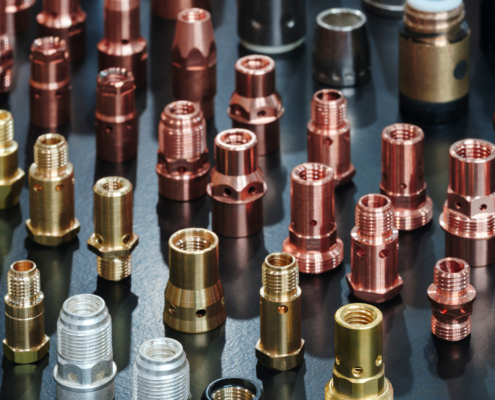
The aerospace supply chain uses “supplier,” “vendor,” and “distributor” interchangeably, but the business models behind those labels aren’t remotely the same.

An aerospace fastener distributor operates from inventory: they query a pricing platform for stock, mark it up, and return a number. If the part is cataloged, the transaction moves quickly. If it isn’t, the answer is “no bid,” engineering questions get forwarded to a manufacturer they’ve never spoken to, and documentation errors have no resolution path.

A true aerospace fastener supplier is built differently. Engineers are on staff. Manufacturing access exists in-house or through integrated partner facilities. When documentation is incomplete or nonconforming, the supplier has the technical knowledge to catch it before it reaches your dock.

Both types advertise themselves as suppliers. That’s the problem.

How the Distributor Model Breaks Down

Distributors serve a real function in the supply chain. For high-volume, commonly specified parts on active approved lists, a distributor’s speed and price competitiveness are entirely appropriate. The limitations become visible when your program steps outside that narrow use case, and in aerospace, it regularly does.

No Bid on Anything Non-Standard

Most aerospace fastener distributors source through commodity pricing platforms. Enter a part number, receive stock availability and a quote. That process works for cataloged parts. The moment a specification is narrow, a configuration is unusual, or a material falls into a specialty category, the platform returns nothing.

The distributor has no capacity to cross-reference alternate spec families, assess COTS modification options, or evaluate whether a related part could satisfy the requirement under a different designation. Their answer is “not available,” and they have nothing more to offer.

Documentation They Can’t Fix

When a distributor receives a fastener shipment, the documentation originates with the manufacturer. The distributor passes it along with varying degrees of review, but without engineering staff, there’s no one equipped to evaluate accuracy rather than just completeness.

If a certificate of conformance references the wrong specification revision, if a material test report has a discrepancy, or if traceability records have a gap, the distributor’s only recourse is contacting the manufacturer and waiting. That wait becomes a schedule problem when it surfaces at your receiving dock.

Explore the full range of aerospace applications KJL Fasteners supports, from jet engines and rockets to satellites, with engineering and manufacturing depth your program can actually rely on.

What a Real Aerospace Fastener Supplier Brings to the Program

The gap between a distributor and a genuine aerospace fastener supplier is most visible in three areas. Each one affects what your program can actually do when a standard transaction isn’t enough.

Engineering Staff With Product Knowledge

A real aerospace hardware supplier employs engineers who understand specification families, material properties, and manufacturing processes at the part level. When a question arises about whether a specification allows an equivalent, whether a COTS part can be modified to meet a requirement, or whether a material substitution is defensible, there’s someone on staff who can answer it technically. That resource doesn’t exist at a distributor.

Manufacturing Access and Alteration Capability

Many qualified aerospace fastener manufacturers maintain direct production capacity or tight integration with partner manufacturing facilities. Non-standard requirements don’t default to “no bid.” They get evaluated and, when warranted, produced to specification. Value-added alterations on COTS parts are also within scope, which prevents a full custom order when a modification to an existing part satisfies the requirement.

Documentation Competence

An AS9100 supplier with engineering staff can review documentation against the actual specification, catch discrepancies before shipment, and correct errors with knowledge of what the right version should say. That’s a meaningfully different capability than a distributor forwarding the paperwork they received.

The Documentation Failure Rate Is a Real Program Risk

Documentation failures at receiving inspection are one of the most persistent and underacknowledged costs in aerospace fastener procurement. The common failure points follow a recognizable pattern:

  • A certificate of conformance referencing the wrong specification revision
  • A material test report with a discrepancy in alloy or heat treatment data
  • Missing dimension inspection records on a non-standard or custom part manufacturing
  • Traceability documentation with a gap that can’t be resolved without going back to the manufacturer

The root cause is structural. Most standard fasteners moving through distribution channels are produced by manufacturers selling to dozens of buyers simultaneously. The distributor in the middle often lacks the engineering background to catch a problem before it reaches your receiving dock. Working with an aerospace fastener supplier who treats documentation as an engineering deliverable rather than a shipping formality changes this equation. The package that arrives is one that someone who understood the specification actually reviewed.

Checking the Difference Before You Award the PO

The lowest quote on an RFQ doesn’t account for the cost of a documentation rejection at receiving, a program delay while nonconformance is resolved, or a failed approved supplier addition when the vendor can’t meet your qualification requirements. Two direct questions clarify what you’re actually buying before the PO is signed.

Do They Have Engineers on Staff Who Can Engage Technically?

Ask directly whether the company employs engineers who can answer specification questions. A distributor redirects you to the manufacturer. A genuine aerospace fastener supplier can answer from their own technical staff immediately. The quality of that response, or the absence of one, tells you more about the relationship than any sales conversation.

What Happens When a Part Isn’t in the Catalog?

Ask what the vendor does when a part isn’t available through standard sourcing. A distributor’s honest answer is “we return a no bid.” A real aerospace fastener supplier with manufacturing access describes their actual process: cross-spec evaluation, COTS modification assessment, or in-house fabrication when sourcing fails. That answer tells you exactly what the relationship will look like when your program encounters something outside the easy case, which it will.

KJL Fasteners Is Built as a Supplier, Not a Distributor

KJL Fasteners is an AS9100-certified aerospace fastener supplier with engineering staff, manufacturing capability through partner facilities, and the documentation competence that makes a difference when both parts and paperwork have to be right. The team has spent over two decades sourcing and manufacturing fasteners for aerospace, rocket, jet engine, and satellite programs, including prime contractor relationships where documentation rigor isn’t negotiable.

When a part isn’t available through standard channels, KJL can cross-reference across spec families, perform value-added alterations on COTS hardware, or build to specification from aerospace-grade materials including titanium, A286, and Inconel 718. If you need a genuine aerospace fastener supplier rather than another quote from a search-based distributor, reach out to our team and we’ll talk through what your program actually requires.

More Like This

How To Tell Whether Your Aerospace Fastener Supplier Actually Gets Documentation Right
High Angle Close Up Of Commercial Aircraft Engine Turbine Fan Blades
Aerospace Fasteners In 2025 And Beyond Materials, Manufacturing, And Market Shifts Img
Inconel Aerospace Fasteners, Titanium, And Beyond Material Science In Custom Aerospace Fastener Manufacturing
Custom Fastener Sourcing What To Do When Standard Parts Don’t Fit