Aerospace Fasteners in 2025 and Beyond: Materials, Manufacturing, and Market Shifts

Aerospace engineering is entering a new era defined by rapid advancements in materials, manufacturing technologies, and supply chain strategy. As aircraft platforms evolve and sustainability, automation, and performance demands intensify, aerospace fasteners are undergoing their own transformation. These components may be small, but shifts in aerospace materials, smart manufacturing, and additive technologies are reshaping how engineers design, source, and qualify them.
The Emerging Landscape of Aerospace Fastener Innovation

The fastener market is evolving in response to aircraft design complexity, extreme performance environments, and the need for more sustainable, cost-effective production. Aerospace manufacturers are increasingly prioritizing innovation in three areas: smarter manufacturing, advanced alloys, and a more resilient aerospace supply chain.

Technology Pressures That Drive Fastener Innovation

Every generation of aircraft demands lighter structures, stronger materials, and higher reliability metrics. As a result, traditional machining practices and conventional materials are giving way to technology-driven precision, automation, and digital inspection methods.

Aerospace OEMs Expect Suppliers to Innovate

Major primes are moving toward long-term partnerships with suppliers who can implement robotics, automation, and data-driven manufacturing. Suppliers relying solely on legacy machining systems are quickly falling behind. The market now rewards those capable of producing fasteners with tighter tolerances, shorter lead times, and fully traceable digital documentation.

Smart Manufacturing: From Pneumatics to Intelligent Automation

Aerospace fastener production is being reshaped by automation, real-time monitoring, and AI-driven inspection systems. The shift toward additive manufacturing in aerospace and digitally enabled machining is poised to redefine the category.

AI-Assisted Component Inspection

Rather than relying exclusively on human inspection, leading suppliers now integrate artificial intelligence into the inspection process. Machines capture hundreds of images of correctly aligned fasteners and use that data to automatically detect deviation. If a fastener doesn’t match the expected profile, the system rejects it instantly, significantly reducing the risk of quality escapes.

This automation not only improves precision but also accelerates throughput, a crucial advantage when production schedules tighten.

Robotic Systems Enhancing Consistency and Speed

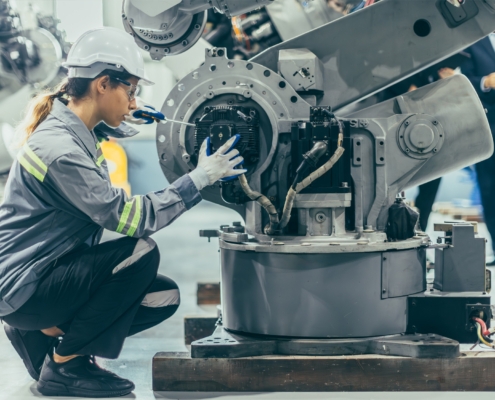
Robotics are increasingly used to handle threading, material feeding, part alignment, and automated gauging. Unlike traditional pneumatic systems, which operate with mechanical limits, robotic systems provide speed, accuracy, and repeatability. These tools allow qualified suppliers to consistently hit micro-tolerance requirements that aerospace applications demand.

Digitally Connected Machines and Smart Manufacturing Integration

Smart manufacturing systems incorporate sensors that collect real-time data on torque, temperature, wear, and machine drift. This digital feedback loop helps prevent defects and minimizes downtime by enabling predictive maintenance.

Suppliers using this technology can offer faster turnaround times, increased batch uniformity, and audit-ready quality data.

Aerospace Materials: The Next Generation of High-Performance Fasteners

The materials used for aerospace fasteners are evolving to meet new structural, thermal, and environmental challenges. As aerospace programs push into hotter engine zones, higher load factors, and more weight-sensitive structures, advanced alloys are becoming essential.

Titanium for Weight-Critical Applications

Titanium remains a top choice where weight reduction directly impacts fuel efficiency and aircraft range. Its exceptional strength-to-weight ratio allows engineers to replace heavier steel components without sacrificing performance.

Inconel and High-Temperature Superalloys

As engines grow hotter and more efficient, Inconel aerospace fasteners and similar superalloys are increasingly important. These materials maintain mechanical strength under extreme temperatures and are now heavily used in propulsion systems, high-heat ducting, and next-generation jet engines.

A286 and Other Versatile Alloys

A286 continues to be a staple alloy for aerospace fasteners due to its excellent balance of cost, strength, and manufacturability. It performs reliably in both cold and elevated temperatures, making it ideal for many structural applications.

Multiphase Alloys for Extreme Stress Environments

Alloys like MP35N, MP159, and other multiphase materials push performance into new territories—supporting extreme loads, high fatigue cycles, and harsh atmospheric conditions. While manufacturing these alloys is challenging, demand continues to increase as aerospace structures grow more advanced.

Fast-evolving platforms demand fasteners engineered with precision, advanced materials, and modern manufacturing. See how KJL’s custom manufacturing capabilities help teams stay agile, reduce risk, and meet next-generation aerospace performance standards.

Additive Manufacturing Aerospace: Expanding Fastener Possibilities

Additive manufacturing (AM) is gaining traction in aerospace fastener R&D. While AM is not yet the go-to method for high-volume production, its advantages are driving investment and exploration.

Design Flexibility That Traditional Machining Can’t Match

AM enables complex geometries, internal channels, or weight-optimized shapes that cannot be machined through subtractive methods. For prototype development or highly specialized fasteners, additive manufacturing can drastically reduce lead times.

Material Efficiency and Reduced Waste

Traditional machining often produces significant scrap, especially when working with costly materials like titanium or Inconel. AM minimizes material waste, supporting both cost control and aerospace sustainability initiatives.

Faster Development Cycles for Experimental Platforms

As aerospace companies develop experimental propulsion systems, UAV platforms, and space technologies, additive manufacturing supports rapid iteration and testing without requiring full production runs.

How the Aerospace Supply Chain Is Changing in 2025 and Beyond

New technologies and materials are only part of the equation. Aerospace companies also face shifting market realities impacting how fasteners are sourced and delivered.

Increasing Pressure for Supply Chain Resilience

The industry is still recovering from supply chain disruptions triggered by global events, workforce shortages, and facility closures, such as the SPS Jenkintown fire. These events revealed how fragile single-source strategies can be.

Diversified Sourcing as a Competitive Requirement

OEMs are now actively diversifying their supplier base to avoid shortages. Suppliers with broader networks, deeper inventory access, and custom manufacturing capabilities are becoming preferred partners.

Digital Documentation and Cybersecurity Expectations

As digital manufacturing expands, cybersecurity has quickly become essential. OEMs want suppliers who can protect CAD models, digital twins, inspection data, and CNC program files. Secure digital workflows are no longer optional—they’re required for long-term collaboration.

What Engineers and Procurement Teams Should Prepare For

Aerospace organizations evaluating fastener strategies for 2025 and beyond should consider several trends shaping long-term planning.

Material Availability Challenges

Exotic alloys face unpredictable supply cycles driven by mining limitations, geopolitical factors, and industrial demand. Programs must plan for volatile lead times, especially for superalloys.

Lifecycle Considerations Beyond the OEM Build

Fasteners must not only meet OEM loads—they must perform predictably in MRO environments. Material fatigue resistance, thermal behavior, reworkability, and corrosion properties all influence lifecycle cost.

Compatibility With Legacy Platforms

New aircraft designs often integrate with older airframes or reuse components across fleets. Fasteners must be designed with cross-platform compatibility in mind to avoid costly redesigns.

Embrace the Next Era of Aerospace Manufacturing With KJL Fasteners

Aerospace fasteners are evolving with the industry, shaped by advanced manufacturing, emerging materials, and the growing demand for resilient supply chains. Engineers and procurement teams must plan ahead, selecting suppliers who embrace automation, support rapid prototyping, and adapt to shifting market realities.

As aerospace innovation accelerates, the most successful programs will rely on partners who understand both the technology and the mission. KJL Fasteners offers the expertise, advanced systems, and forward-thinking approach needed to support next-generation aerospace platforms.

More Like This

Inconel Aerospace Fasteners, Titanium, And Beyond Material Science In Custom Aerospace Fastener Manufacturing
Custom Fastener Sourcing What To Do When Standard Parts Don’t Fit
Shiny Metal Aerospace Parts After Cnc Machining On Steel Surface With Selective Focus, Industrial Background
Why Compliance Standards Are Crucial In The Aerospace Manufacturing Industry
The Top Challenges In Aerospace Fastener Manufacturing
Aerospace Fasteners Vs. Industrial Fasteners What’s The Difference
A Batch Of Shiny Metal Cnc Aerospace Parts Production Close Up With Selective Focus For Industrial Background