Understanding Aerospace Fastener Engineering and Manufacturing

In aerospace and other mission-critical fields, even the smallest components must meet exacting standards. Aerospace fasteners are uniquely engineered to withstand extreme conditions, from the high heat of rocket engines to the intense pressure and vibration endured by aircraft and satellite components. In this blog, we’ll explore how these specialized fasteners are engineered and manufactured to ensure maximum performance and reliability, the key applications they serve, and why partnering with a custom fastener manufacturer like KJL Fasteners can make all the difference.

The Role of Aerospace Fasteners in High-Performance Applications

Aerospace fasteners stand apart from typical fasteners due to the specific requirements of the industries they serve. Engineered for high-stakes, mission-critical applications, these fasteners must perform flawlessly under the most challenging conditions, such as extreme temperatures, pressure, and vibrations. Fasteners in aerospace applications are not simply bolts or screws—they’re complex components designed to secure rocket engines, aircraft wings, and satellite panels, where any failure can mean the difference between mission success and failure.

Core Elements of Fastener Engineering

To meet the unique demands of aerospace applications, fastener engineering focuses on critical elements like material selection, design precision, and customization.

Material Selection for Aerospace Fasteners

Material choice is foundational in aerospace fastener engineering. Fasteners used in aerospace need to be incredibly durable, lightweight, and resistant to corrosion, and they must maintain strength at high temperatures. Common materials include:

  • Titanium: Known for its high strength-to-weight ratio and excellent corrosion resistance, titanium is ideal for aerospace applications where weight savings are essential, like in aircraft and rockets.
  • Stainless Steel: This material is often used for its durability, resistance to rust, and capability to withstand high temperatures and pressures.
  • Inconel: A superalloy that resists oxidation and remains strong even at very high temperatures, Inconel is frequently used in rocket engines and other high-heat environments.

The right material can enhance an aerospace project by providing optimal strength and resilience while keeping weight to a minimum, a key balance for mission efficiency and performance.

Design Precision and Customization in Fastener Engineering

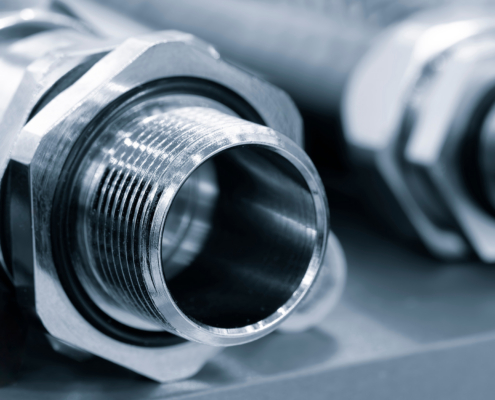
Fasteners must be designed to fit exactly within complex systems, ensuring stability, safety, and efficiency. Precision machining tools such as CNC machines are often used to create fasteners with micrometer-level accuracy, ensuring an exact fit and minimizing the risk of failure under stress.

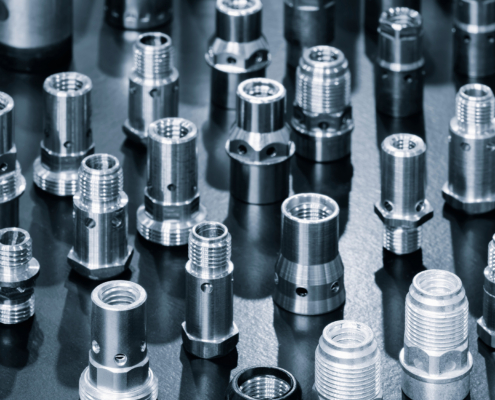
Customization is also essential for fasteners designed for specific applications, whether to fit unique aerospace structures or meet particular load-bearing requirements. Some aerospace fasteners are custom-designed from scratch, while others are modified from COTS (Commercial Off-the-Shelf) designs to meet mission-specific demands. Customization enables engineers to create fasteners that withstand high vibration in jet engines or the extreme cold of space for satellite components.

Manufacturing Processes for Aerospace Fasteners

The manufacturing process for aerospace fasteners is as critical as their design. Each fastener undergoes rigorous processes to ensure it meets the stringent standards required in aerospace applications.

Forging and Machining Techniques

Manufacturing aerospace fasteners often involves forging, which compresses metals under high pressure to form a durable shape, enhancing the fastener’s strength and integrity. Following forging, advanced CNC machining techniques create the precise shape, size, and threading required for aerospace applications.

Standard mass-production techniques are often insufficient for aerospace-grade fasteners. Each fastener must be manufactured with attention to detail, with engineers controlling every stage of production to ensure no faults or imperfections. While standard fasteners may be mass-produced, custom aerospace fasteners are frequently produced in small, meticulously monitored batches to maintain quality.

Heat Treatment and Surface Coatings

Heat treatment is a crucial step in strengthening aerospace fasteners, helping them resist stresses and hold their shape even under extreme temperatures. This process typically involves heating the fastener to a specified temperature and then cooling it at a controlled rate, optimizing the material’s microstructure for durability.

To further enhance performance, aerospace fasteners receive specialized coatings. These coatings can add corrosion resistance for an extended lifespan, which is especially valuable for satellites exposed to harsh environmental conditions. Additionally, some coatings protect against high temperatures, ensuring the fastener remains stable in rocket engines or other extreme environments.

Quality Control and Testing for Mission-Critical Applications

Quality control is the backbone of aerospace fastener manufacturing, where each part is subject to exhaustive testing to guarantee reliability. Common testing methods include:

  • Tensile Strength Testing: Ensures the fastener can withstand the forces it will encounter without deforming or breaking.
  • Fatigue Testing: Tests the fastener’s resilience under repeated stress cycles, crucial for fasteners in aircraft and rockets that experience ongoing pressure.
  • Non-Destructive Testing (NDT): Utilizes methods like X-rays or ultrasonic waves to inspect the interior of the fastener for hidden flaws, ensuring internal integrity without damaging the part.

By meeting strict quality standards through rigorous testing, aerospace fasteners are confirmed to be ready for the field. This level of quality assurance is critical, as even a single failure can have catastrophic consequences in mission-critical applications.

At KJL Fasteners, we’re proud to be the trusted provider of fasteners for prime contractors across mission-critical applications, from aerospace and rockets to satellites and jet engines.

Applications and Requirements for Rocket Engine Parts, Aircraft, Satellites, and More

Fasteners are vital to a wide range of applications. Each use has specific requirements, necessitating distinct engineering and manufacturing solutions.

Rocket Engine Parts

In rocket engines, fasteners must resist extreme temperatures and intense structural forces. Custom-manufactured fasteners, often composed of superalloys like Inconel, are used in these environments to prevent melting or weakening under the conditions encountered during launches and re-entries.

Aircraft Fasteners

For aircraft, lightweight fasteners are preferred to reduce overall weight, enhancing fuel efficiency and performance. However, these fasteners must also resist vibration and other forces encountered in flight. Titanium fasteners are commonly used for their strength and weight efficiency, supporting structures from wings to fuselage.

Satellite Components

Satellites operate in the harsh vacuum of space, where extreme temperature shifts and potential corrosion require highly specialized fasteners. Coated fasteners made from corrosion-resistant materials like stainless steel or titanium are commonly employed to ensure longevity and resistance to oxidation, which is critical for components that must remain reliable in orbit for extended periods.

Aerospace Applications

Aerospace applications often combine the demands seen across rocket and aircraft fastener engineering. Due to the harsh environmental conditions encountered in space missions and high-altitude flights, fasteners must meet stringent requirements for resilience, corrosion resistance, and thermal stability. In aerospace applications, custom fasteners are often engineered to endure rapid temperature shifts, intense mechanical stress, and extreme pressure differentials, ensuring structural integrity for long-term missions.

Why You Need to Partner With a Custom Fastener Manufacturer

Working with a custom fastener manufacturer that understands aerospace standards, such as KJL Fasteners, provides significant advantages. Our end-to-end capabilities—covering material selection, custom design, manufacturing, and rigorous testing—make us a valuable partner for mission-critical projects. Our commitment to quality has made us a trusted partner for top-tier contractors, including NASA and Lockheed Martin, who rely on our fasteners for their safety-critical applications.

KJL Fasteners not only meets the regulatory standards required for aerospace projects but also offers unique expertise as the only company authorized to alter COTS designs for specific mission needs. This ability enables aerospace contractors to receive tailored solutions that enhance both performance and compliance with DoD regulations, ensuring that each fastener meets material and production standards.

Find Your Fastener Solution With KJL Fasteners

Fastener engineering and manufacturing play a vital role in the safety, reliability, and performance of aerospace components, supporting mission-critical applications in rockets, jet engines, and satellites. At KJL Fasteners, we’re proud to provide top-tier expertise, custom designs, strict quality control, and more to ensure you have the products you need for your mission-critical application. Contact our team today to support your mission’s success.

More Like This

How Custom Fasteners Are Engineered For Rocket Propulsion Systems
Aerospace Fasteners In 2025 And Beyond Materials, Manufacturing, And Market Shifts Img
Inconel Aerospace Fasteners, Titanium, And Beyond Material Science In Custom Aerospace Fastener Manufacturing
Aerospace Fastener Alternatives When Oem Part Numbers Fail
Worker Checking Airplane Engine In Airport Hangar
Custom Fasteners And Cost Savings Why Custom Fasteners Can Save You More